
Benenden Health members are entitled to 10% off treatments over £1,000. Payment plans available.
About us
At Benenden Hospital, we’re dedicated to providing the best care and our patients are at the heart of everything we do.Plastic and cosmetic surgery
Embrace a new you with a range of procedures designed to improve your natural features.Fund your treatment
However you fund your treatment, you can feel confident choosing Benenden Hospital.Patient journey
As the only CQC rated Outstanding hospital in Kent, you can be confident in choosing Benenden Hospital for your diagnosis and treatment.Ankle impingement is a painful condition that prevents full movement of the ankle; it occurs when the soft tissues around the ankle become pinched.
Benenden Health members are entitled to 10% off treatments over £1,000. Payment plans available.
Injuries can be a frustrating and painful part of participating in physical activity. That's why we offer a wide range of self-pay treatment options - so you can get back to taking part in the sports you love.

Ankle impingement is a painful condition that prevents full movement of the ankle. It usually occurs when the ankle is fully bent, either up or down, causing pain at the front (anterior impingement) or the back (posterior impingement) of the ankle joint.
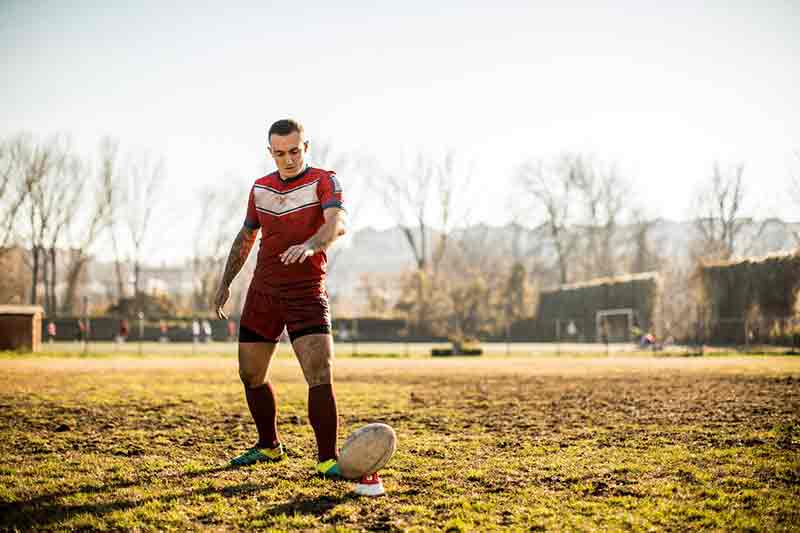
Anterior ankle impingement is more common and often referred to as 'footballers ankle'. In this case, the ligaments get thicker and are pinched between the bottom of the shin bone and the bones of the foot.
Subsequent healing can lead to the formation of too much scar tissue in the region and bony growths known as osteophytes, resulting in ankle impingement.
Posterior ankle impingement, often referred to as 'dancers heel', is less common. It occurs at the back of the ankle and is caused by damaged ligaments, tendons or the joint capsule at the back of your ankle becoming swollen.
Over time the tissues can thicken, and your body may attempt to heal by producing a bony growth/spur which can then cause further pinching of the soft tissues.
Anterior ankle impingement is frequently caused by a bad or a repeated ankle sprain and can cause weakness in the joint for a long time after the original injury.
Posterior ankle impingement is caused by repetitive compression of the bones at the back of your ankle causing the soft tissues to become pinched and swollen, eventually this can lead to a bony growth protruding at the back of the joint. Posterior impingement can also result from poor rehabilitation after an ankle strain or might be as a result of an extra piece of bone being present at birth.
Ankle impingement can also be caused by arthritis.
Anterior ankle impingement symptoms include:
Posterior ankle impingement symptoms include:
Ankle impingement (anterior ankle impingement or posterior ankle impingement) is usually successfully treated with rest or a steroid injection. More severe or recurring cases may sometimes require surgery. The exact type of surgery you have will depend on the cause, location and severity of the ankle impingement.
Surgery involves removing the bone or soft tissue that’s causing the ankle impingement; this can usually be carried out arthroscopically (keyhole technique) or, if the bone spurs are large, by open surgery on the ankle joint.
The operation may be carried out under a general anaesthetic (so you’ll be asleep) or a local anaesthetic (so you’ll stay awake but won’t feel anything). The operation usually takes around an hour and you’ll usually go home on the same day.
Immediately after surgery we’ll help you manage any pain or discomfort with painkillers. We’ll discuss your aftercare and arrange any follow-up appointments with you before you leave hospital.
In the next few days you’ll be able to walk with the aid of crutches but you’ll need plenty of rest with your leg raised. You’ll be offered a programme of physiotherapy to aid your recovery, and we’ll let you know how soon you’ll be able to resume normal day to day activities.
Baljinder Singh Dhinsa
Consultant Orthopaedic Surgeon
Language(s): English, Punjabi
Location(s): Kent
Mr Singh Dhinsa's specialties include hallux valgus surgery and management of foot and ankle conditions
Mr Baljinder Singh Dhinsa
Michael Dunning
Consultant Orthopaedic Surgeon
Language(s): English
Location(s): Kent
Mr Dunning's specialities include hallux valgus surgery, sports injuries of the foot and ankle and arthrodesis surgery.
Mr Michael Dunning
Crispin Southgate
Consultant Orthopaedic Surgeon
Language(s): English
Location(s): Kent
Mr Southgate's specialities include foot and ankle conditions - covering sports injuries and more.
Mr Crispin SouthgateIt's easy to find out more about ankle impingement treatment or to book a consultation by giving us a call or completing our enquiry form